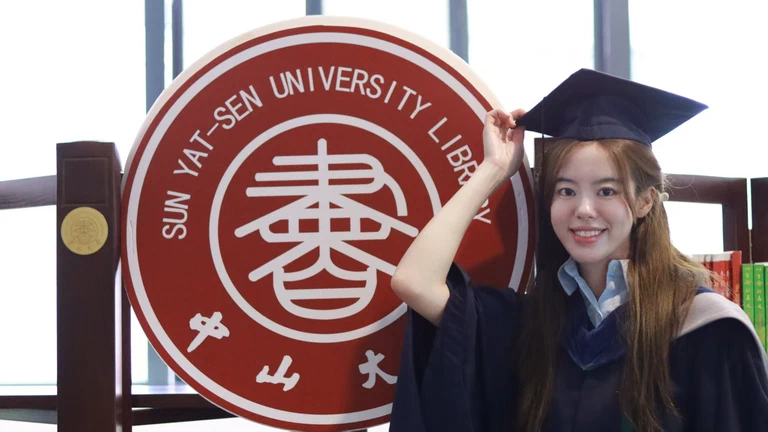
About Me

I am Muzi Ouyang (欧阳木子) — I go by Mia. I am a PhD candidate in Chemistry at Tsinghua University, advised by Prof. Ying Tan (谭英) at the Institute of Biopharmaceutical and Health Engineering (iBHE) in Shenzhen, where I spend most of my time thinking about why protein degraders sometimes stop working, and what that failure can teach us.

My research sits at the intersection of targeted protein degradation, cancer drug resistance, and molecular dynamics. It started with an observation that didn’t make sense: a KRAS-targeting bioPROTAC I had engineered worked beautifully in one breast cancer cell line, and almost completely failed in its drug-resistant counterpart. Chasing that discrepancy led me to a mutation in a part of KRAS nobody had looked at closely before, and eventually, through all-atom MD simulations and a carefully designed control experiment, to a mechanism: the degrader’s activity depended on how the target protein clusters itself at the membrane, not just on how tightly it binds. That turned a puzzling failure into a diagnostic principle I now use to think about degrader design more generally.

From there, my work branched in two directions I care about equally. One is building degraders as actual therapeutic strategies, like a dual-target bioPROTAC that reverses tamoxifen resistance in breast cancer by co-degrading two proteins at once. The other is computational: I taught myself to run a full de novo protein design pipeline (Rosetta, ProteinMPNN, AlphaFold2) from scratch and used it to design new binders for small-molecule targets, which I’ve open-sourced on GitHub for anyone who wants to build on it.

What I’m looking for next is a postdoc where I can keep working at this intersection, bringing mechanistic, structure-aware thinking to new degradation chemistries and new disease contexts.

Education

PhD in Chemistry

Sep 2023 – Jun 2027 (expected)

Tsinghua University

Master's Degree in Basic Medicine

Sep 2020 – Jul 2023

Sun Yat-sen University

Bachelor's Degree in Animal Sciences

Sep 2016 – Jul 2020

Northwest A&F University

Interests

Targeted protein degradation (PROTAC and bioPROTAC) Computational protein design (Rosetta, ProteinMPNN, AlphaFold2) Molecular dynamics and protein conformational mechanism Mechanisms of acquired drug resistance in cancer
📚 Research
My work moves constantly between the bench and the computer, usually because one keeps raising questions the other has to answer.

Wet Lab

Targeted Protein Degradation & Drug Resistance

I design and test protein degraders, mostly bioPROTACs built on E3 ligase scaffolds like TRIM21, and use cancer drug resistance as a lens for understanding when and why they fail. My central finding came from comparing a tamoxifen-resistant breast cancer line (LCC2) to its drug-sensitive parent (MCF7): whole-genome sequencing turned up a mutation in the KRAS hypervariable region, a region with no previously known function, that nearly abolished the activity of a TRIM21-based KRAS degrader specifically in the resistant line. Beyond mechanism, I also build degraders as therapeutic candidates directly, including a tumor-specific bioPROTAC that co-degrades ERα and PI3K p85α to resensitize resistant breast cancer cells to tamoxifen, and, in an ongoing collaboration, a TRIM21-based bioPROTAC achieving dual-target degradation of oncogenic KRAS assemblies in pancreatic cancer.
Dry Lab

Molecular Dynamics & Computational Protein Design

The wet-lab puzzles above are usually what send me back to the computer. To explain why the KRAS mutation broke degrader activity, I ran 182-ns all-atom molecular dynamics simulations (AMBER, with explicit GppNHp and Mg2+) and showed that the mutation changes how KRAS clusters at the membrane, which the degrader’s activity turns out to depend on; swapping in a degrader architecture that doesn’t rely on clustering restored activity, confirming the mechanism computationally and experimentally at once. Separately, I taught myself a full de novo protein design pipeline, Rosetta Match for scaffold matching, ProteinMPNN for sequence design, and AlphaFold2 for structural validation, and used it to design new binders for small-molecule targets from scratch, open-sourcing the pipeline on GitHub. I see this computational side less as a separate skill set and more as the other half of the same question: once you know why a degrader fails, you can start predicting it.

Selected Publications
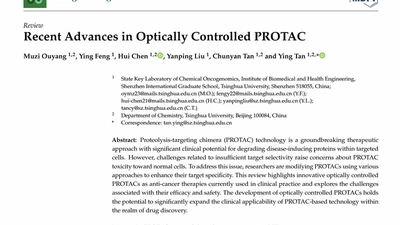
Recent Advances in Optically Controlled PROTAC featured image

Recent Advances in Optically Controlled PROTAC

Proteolysis-targeting chimera (PROTAC) technology is a groundbreaking therapeutic approach with significant clinical potential for degrading disease-inducing proteins within …

avatar
Muzi Ouyang (Mia)
•
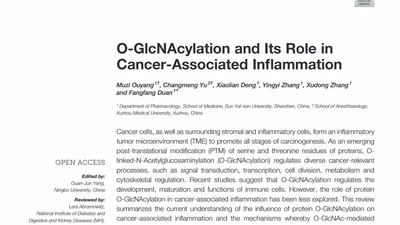
O-GlcNAcylation and Its Role in Cancer-Associated Inflammation featured image

O-GlcNAcylation and Its Role in Cancer-Associated Inflammation

Cancer cells, as well as surrounding stromal and inflammatory cells, form an inflammatory tumor microenvironment (TME) to promote all stages of carcinogenesis. As an emerging post- …

avatar
Muzi Ouyang (Mia)
•
All Publications

Contact

Find Me

Institute of Biopharmaceutical and Health Engineering (iBHE)

Tsinghua Shenzhen International Graduate School

Tsinghua Campus, Xili University Town, Nanshan District

Shenzhen 518055, China

Availability

Happy to arrange calls across time zones

Connect

Seeking postdoctoral positions

I expect to defend in June 2027 and am looking for postdoc positions starting in late 2027, in computational protein design, targeted protein degradation, and chemical biology. Happy to share my research statement and references on request.